
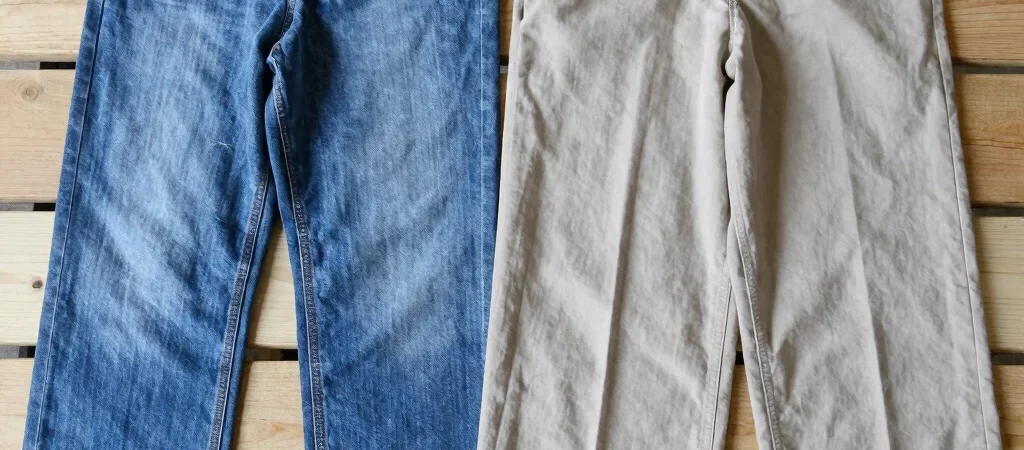
At a glance, baggy jeans and wide-leg pants can share a generous outline. But the fabric, construction, and way each garment falls can make the silhouettes feel distinct. Width is one clue, not the whole description.
Check the fabric and seams
Baggy jeans are made from denim, with familiar details such as a fly, rivets, and five-pocket construction on many styles. The fabric can hold a pronounced line or soften with wear, depending on its weight and finish. Those seams and pockets remain part of the look even when the leg is very roomy.
Wide-leg pants cover a broader range of fabrics and constructions. A pair in cotton twill, linen, or a suiting fabric may fall more fluidly or hold a sharper crease than denim. Look at the fabric label and the garment’s details rather than assuming every wide leg behaves the same way.
Follow the line to the hem
A baggy jean might stay loose through the thigh and taper a little toward the ankle, or keep a wide shape from hip to hem. Wide-leg pants often emphasize a straighter, uninterrupted line, though cuts vary. The side seam and hem show where that shape begins to narrow—or doesn’t.
Shoes can make the difference easier to see. Try each pair with a similar shoe and check whether the hem stacks, skims the top, or leaves the shoe fully visible. That small change can make two garments with similar widths read very differently.
Choose by the day ahead
For a casual day built around denim, baggy jeans bring the familiar texture and pocket details of jeans with extra room through the leg. Wide-leg pants offer another route when you want to explore a different fabric or a cleaner trouser line. Compare the rise, fabric, and hem on your own body; the label matters less than the shape you actually want to wear.