
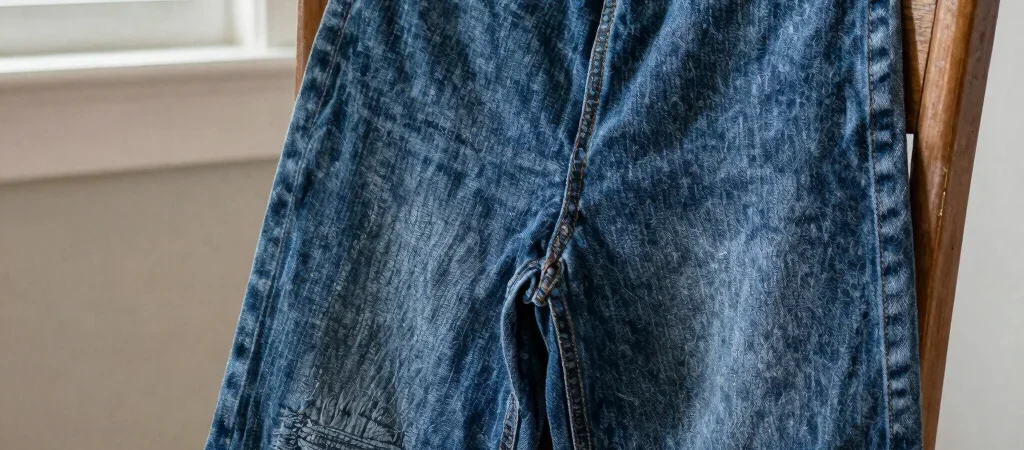
After a long day in jeans, the denim may fold behind the knees or crease where the hips bend. Those small marks show how the fabric moves through an ordinary day. They’re worth noticing, especially if you want to keep the color and surface looking closer to how they started.
Notice where creases form
The most visible folds often appear where the body bends: at the knees, lap, and sometimes the back of the waist. The amount of fading or softening varies with the denim, how often the jeans are worn, and how they’re washed. A stiff pair and a softer, broken-in pair won’t show wear in quite the same way.
Turn the jeans inside out before washing to reduce rubbing on the outer surface. Fasten the zipper and button, and check the care label first; its instructions are the best guide for that particular garment.
Wash with a little intention
When a wash is needed, cold water and a gentle cycle are a sensible starting point for many everyday jeans, unless the label says otherwise. Washing with similar colors can help avoid unwanted dye transfer, especially with darker denim. There’s no single schedule that suits every pair or every day.
Air-drying can help avoid the extra heat and tumbling of a dryer. Hang jeans from the waistband or lay them flat, smoothing the legs so the seams sit naturally as they dry. If you do use a dryer, follow the garment’s care instructions.
Keep the character you like
Some people prefer crisp, even color; others like the worn-in creases that develop at the knees and pockets. Neither approach is the right one for every pair. Pay attention to the fabric and its care label, then choose a routine that suits how you want your jeans to look and feel in everyday rotation.